The Department of Justice Reached a Proposed Consent Decree. They Said the Nebraska Legislature Gave Preferential Treatment to Noncitizen Immigrants Over American Citizens.
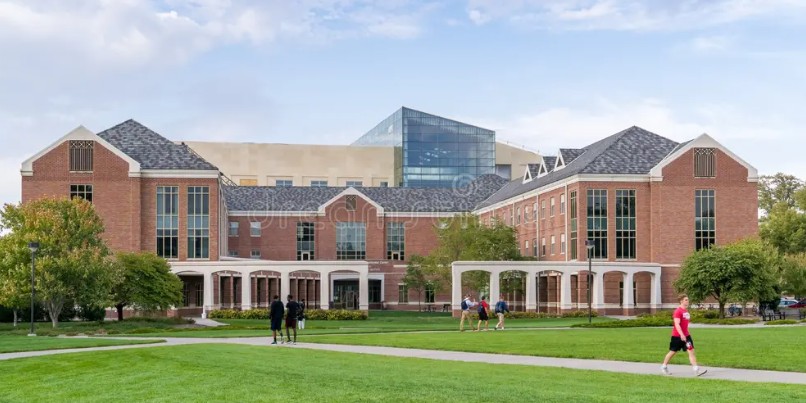
The Esther L. Kauffman Academic Residential Center on the campus of the University of Nebraska
WASHINGTON — Today, the United States filed a complaint against Nebraska and joined with the State in filing a proposed consent decree to permanently enjoin Nebraska laws that provide in-state tuition and financial assistance for noncitizen immigrants.
The proposed consent decree, which must still be approved by the court, would resolve the Department’s claims that Nebraska’s laws unconstitutionally discriminate against American citizens in favor of noncitizen immigrants. Specifically, Nebraska’s challenged laws grant reduced tuition to noncitizen immigrants over U.S. citizens, which not only violates federal law but also incentivizes noncitizen immigrants and rewards undocumented people with scholarship benefits that U.S. citizens are not eligible for.
“For two decades, the Nebraska legislature gave preferential treatment to noncitizen immigrants over American citizens,” said Associate Attorney General Stanley Woodward. “We encourage all States to follow the commonsense correction of Attorney General Hilgers, ceasing any policy that rewards noncitizen entry into our nation with educational opportunities not available to U.S. citizens.”
“Nebraska’s unconstitutional and un-American laws should never have been passed in the first place and are prohibited by federal law,” said Assistant Attorney General Brett A. Shumate of the Justice Department’s Civil Division. “The Department of Justice has won on this exact issue in Texas, Oklahoma, and Kentucky, and we will take this fight to any states that fail to put American citizens first.”
“This proposed consent decree demonstrates the quality of partnership between Nebraska state leaders and the Department of Justice for the shared purpose of ensuring that federal tax dollars are not used to discriminate against Nebraska’s lawful citizens,” said U.S. Attorney Lesley Woods for the District of Nebraska.
“Nebraskans expect that undocumented people won’t get the benefit of in-state tuition and financial aid, and federal law forbids it,” said Nebraska Governor Jim Pillen. “Outdated Nebraska laws to the contrary are deeply misguided and unconstitutional, and I am grateful for the combined efforts of President Trump’s Department of Justice and Attorney General Hilgers to deliver this long-overdue correction. This is the latest example of the tremendous partnership between the State of Nebraska and the Trump Administration.”
“This Nebraska law is unconstitutional as it unlawfully extended benefits to noncitizen immigrants which were not available to American citizens,” said Nebraska Attorney General Mike Hilgers. “We filed the joint motion with the Department of Justice in order to ensure that this unconstitutional law was permanently enjoined.”
The motion came just hours after the Justice Department filed a complaint in the District of Nebraska, Omaha Division, against the state of Nebraska seeking to enjoin the state from enforcing laws that require colleges and universities to provide in-state tuition rates to all immigrants who maintain Nebraska residency, regardless of whether those immigrants are lawfully present in the United States. Additionally, the complaint seeks to enjoin Nebraska from enforcing state laws that afford financial assistance and scholarships to noncitizen immigrants.
This is the 8th lawsuit in a series of actions the department has filed to fulfill President Trump’s commitment to ensure that noncitizen immigrants are not obtaining taxpayer benefits or preferential treatment. These efforts have already delivered wins for the American people, as three similar lawsuits in Texas, Kentucky, and Oklahoma have resulted favorable orders permanently enjoining and declaring unconstitutional analogous laws that gave reduced tuition to noncitizen immigrants. Lawsuits against other states that similarly put noncitizen immigrants ahead of U.S. citizens are pending across the country in Illinois, Minnesota, Virginia, and California.