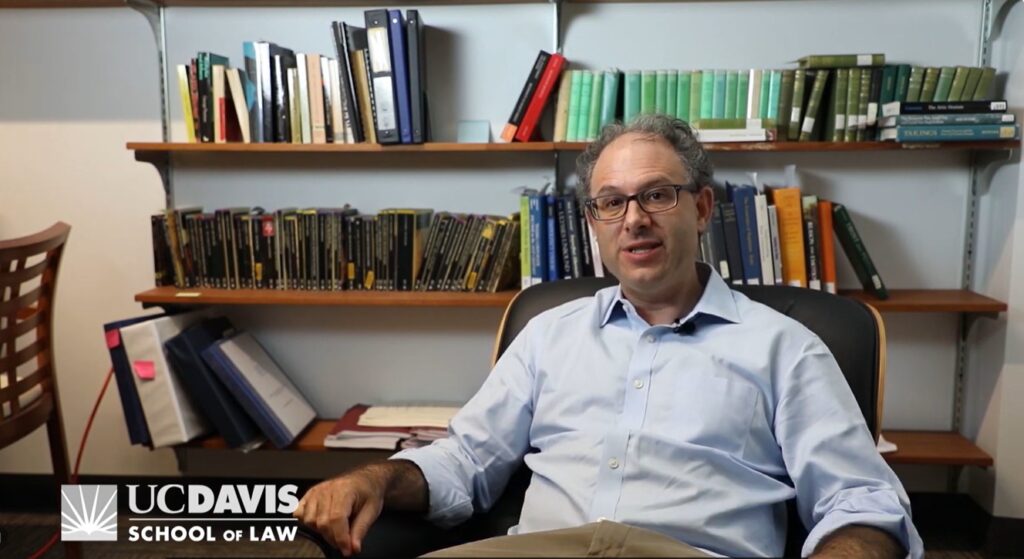
Professor Darien Shanske holds a J.D. from Stanford Law School, a Ph.D. from UC Berkeley in Rhetoric, an M.A. from McGill University in Philosophy, and a B.A. from Columbia University.
By Darien Shanske, Opinion Contributor
Every spring, millions of Californians sit down at our kitchen tables, gather our W-2s and receipts, and do what’s expected of us to pay our taxes.
But this tax season, there’s a glaring truth more people are starting to notice: the wealthiest among us play by an entirely different set of rules.
In California, roughly 200 billionaires collectively hold about $2 trillion in wealth. Much of that fortune goes virtually untouched by income taxes. Why? Because it isn’t treated as “income” at all.
Instead, it sits in stocks, assets, and other investments, growing year after year, often tax-free. Billionaires can borrow against that wealth, live lavishly off loans, and avoid selling assets that would trigger taxes. Thanks to longstanding federal and state loopholes, this system allows extraordinary fortunes to expand while contributing comparatively little back into the public systems that make that wealth possible.
Meanwhile, nurses, teachers, construction workers, and small business owners don’t have that luxury. Their income is taxed regularly and transparently. They can’t defer their wages into untaxed stock portfolios or leverage complex financial strategies to shrink their obligations, and they generally don’t benefit from the poorly designed and regressive tax breaks that have been a hallmark of this administration. They pay what they owe because they have to.
That’s what makes the idea of a one-time billionaire tax in response to a needless one-time emergency so straightforward and fair.
At its core, the proposal simply recognizes that wealth, not just income, reflects real economic power. Now, a state facing real challenges — from hospital closures to over-crowded emergency rooms to rising costs of care — is asking those who have benefited the most to contribute a small share.
Critics argue that taxing wealth is radical. It’s not. What’s truly radical is a system where someone worth tens of billions can pay a lower effective tax rate than a paramedic working double shifts making about $30 an hour on average.
Others claim billionaires will flee. We have heard that before. Yet states that have asked more of their wealthiest residents haven’t seen the mass exodus that opponents predict; in fact, they’ve seen the opposite. For example, after Massachusetts enacted higher taxes on its states’ wealthiest residents, the tax yielded more tax revenue than projected.
With billions in new tax revenue, Massachusetts and other states have been able to increase investment in vital public services — the very things that make states like California an attractive place to live and do business in the first place.
Tax time is supposed to be about shared responsibility. It’s a moment when we collectively invest in the roads we drive on, the schools that educate our kids, and the hospitals and health care systems we rely on in emergencies. But that system only works if everyone participates. And right now, it’s clear that billionaires aren’t.
A one-time billionaire tax won’t solve every problem. But it will take a meaningful step toward restoring balance and ensuring that the people who have gained the most from our economy are helping sustain it.
Because if ordinary Californians are expected to pay their fair share every April, it’s not too much to ask billionaires to do the same, even just once.
Darien Shanske is professor of law at UC Davis and co-author of the California Billionaire Tax Act.
AYUDANOS A COMPARTIR